
Investigating LLM-Driven Curiosity in Human-Robot Interaction
Jan Leusmann, Anna Belardinelli, Luke Haliburton, Stephan Hasler, Albrecht Schmidt, Sven Mayer, Michael Gienger, Chao Wang
Proceedings of the 2025 CHI Conference on Human Factors in Computing Systems (CHI ´25).
Contribution
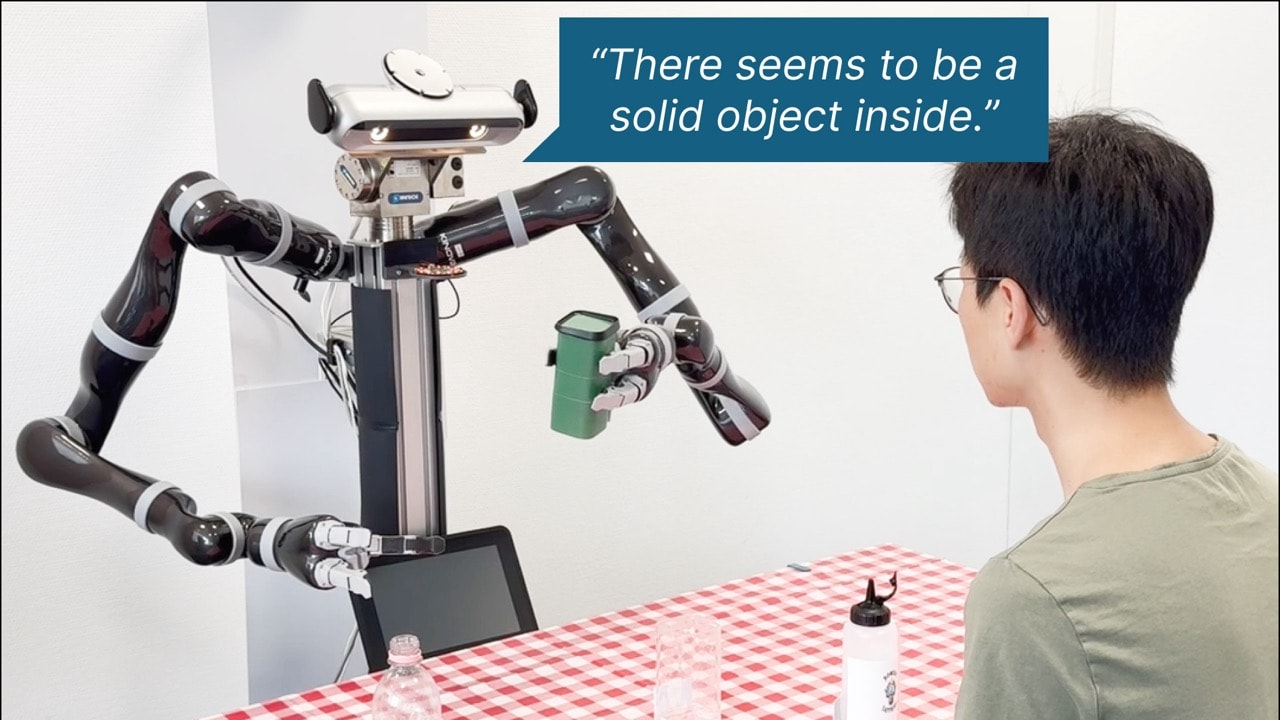
Integrating curious behaviour into robots is essential for them to learn, adapt, and enhance human-robot interaction over their lifetime. But how does a robot's curiosity affect the people it interacts with?
In this paper, we developed an LLM-driven system with an adaptable character. With this, we conducted a user study with a curious and non-curious character, and investigated whether participants perceived this curiosity and how it affected user experience. We found that participants prefer to interact with the curious robot, due to its higher human-likeness, liveliness, and autonomousness. We contribute six design recommendations on how to use user-centric curiosity as an advantage.
Curious Behaviors
Social
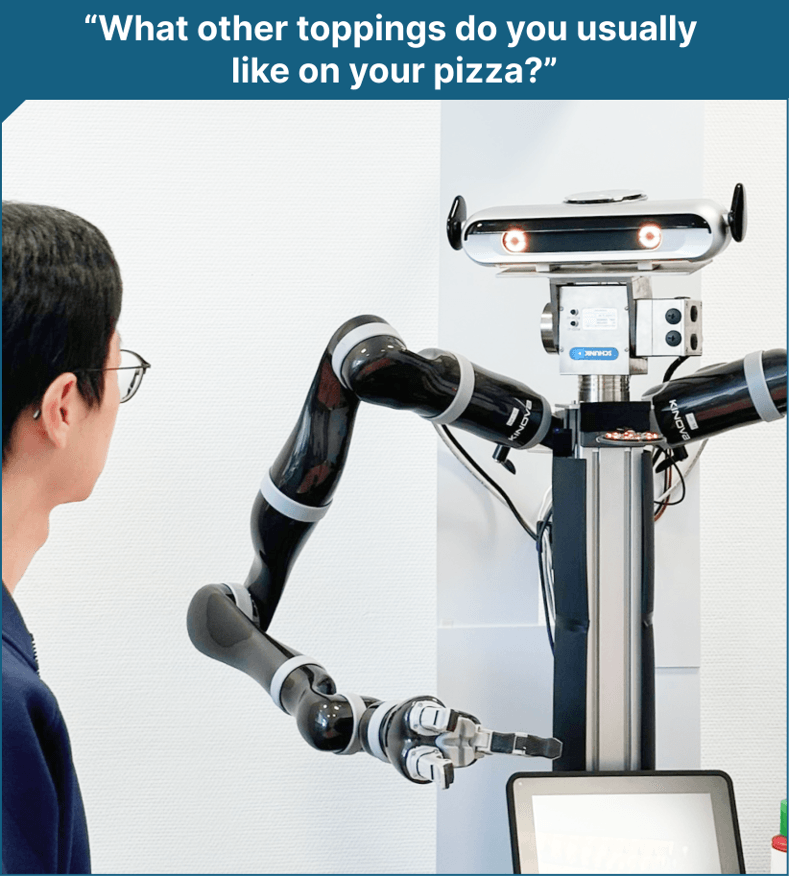
Asking for name
Asking about the task
Asking about preferences
Information Gathering
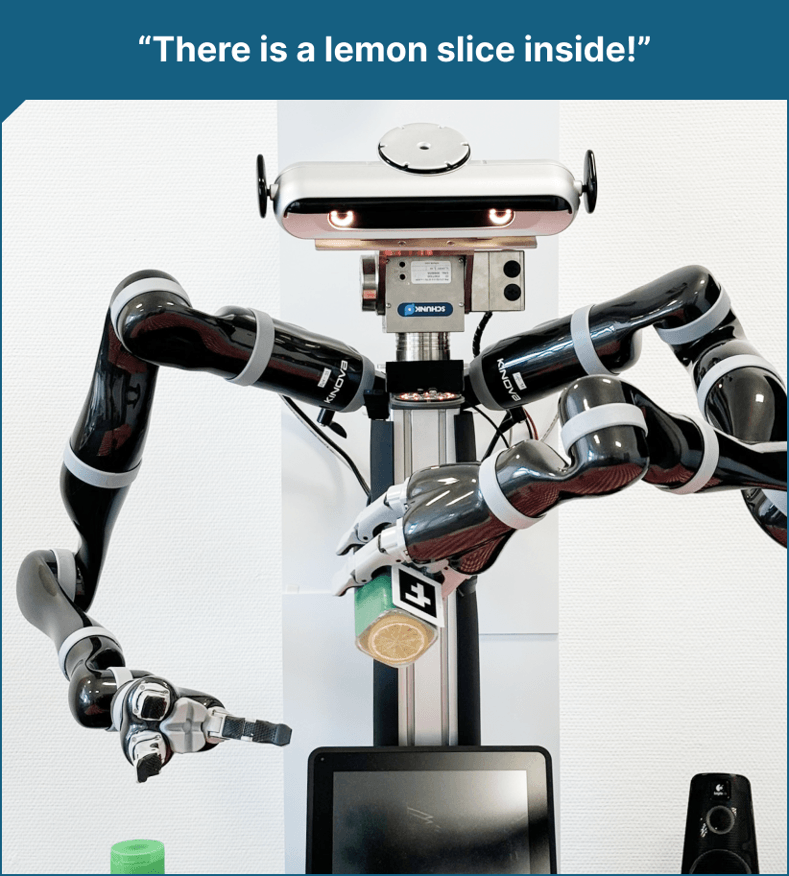
Shaking
Poking
Looking Inside
Expressive
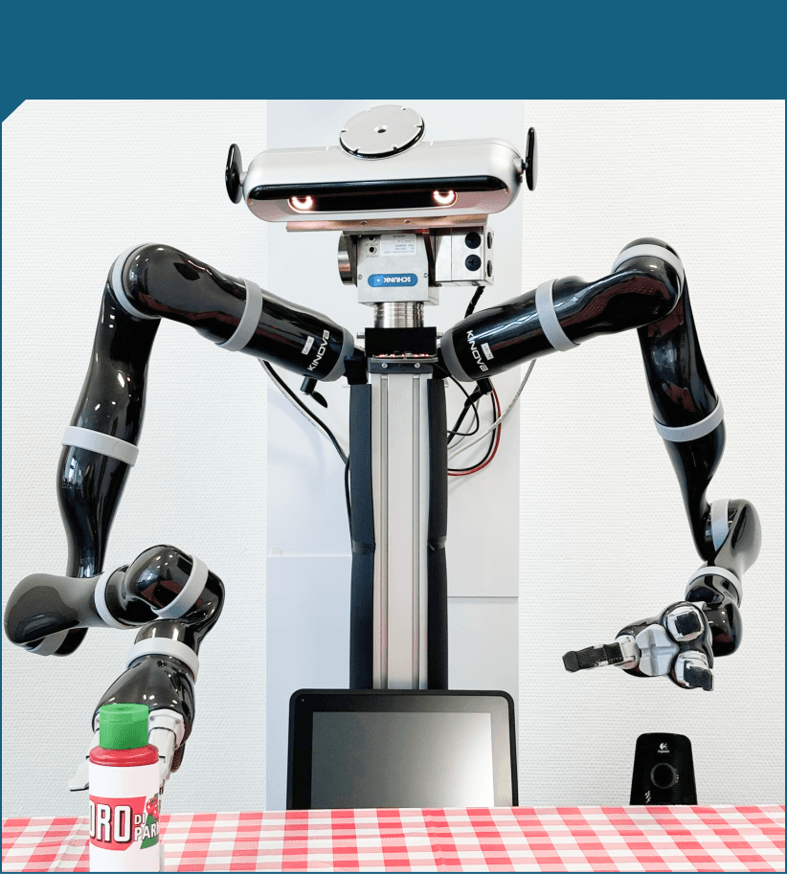
Looking at object(s)
Looking around
Study Design
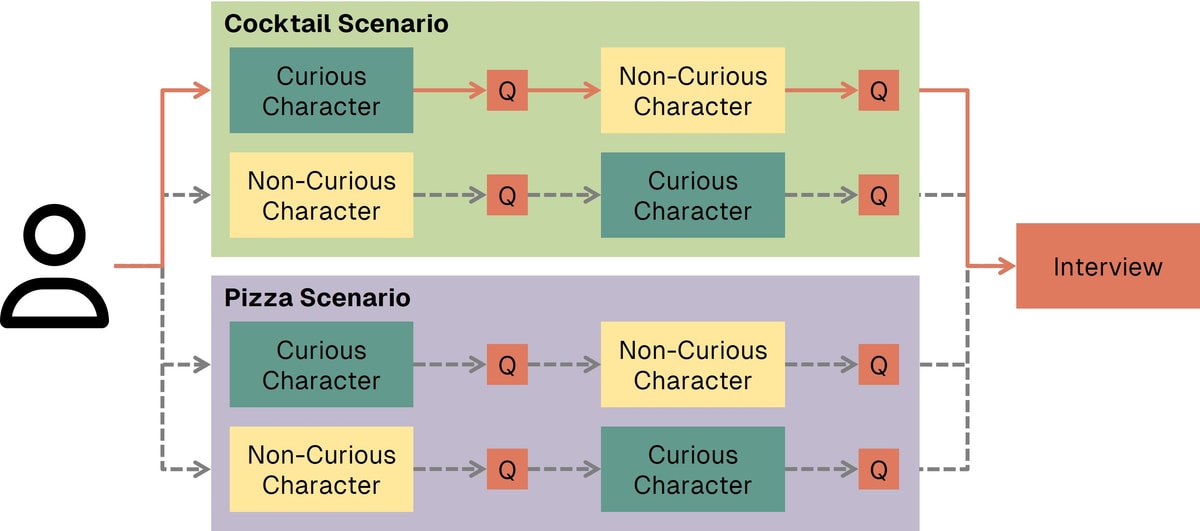
We used the two independent variables: character (within-subject) and scenario (between-subject) to investigate whether we can modulate the curiosity of an LLM-driven robot and how this affects user experience.